Monday, April 30, 2007

The Beginning of the War Will be Secret

I spent way too much time today going back and forth to Petco to replace the hamsters which power the ED webservers and online tchotchke store. They keep dying on me, overworked from exhaustion by trying to keep up with the tremendous onslaught of increased traffic from Long or Short Capital, which linked their readership to this blogsite a few days ago.

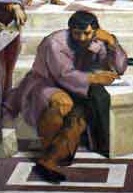
Like any committed blogosopher desirous of planting my pearls of wisdom as broadly and deeply as possible in the Weltanschauung, I was initially delighted to have received the endorsement of my mentors at LoS. However, as I ruefully dumped my twenty-fifth dead rodent ($13.95 each, plus tax) into the trashbin this afternoon, the delphic utterance pictured at the top of this post popped into my head.

It is one of many such sayings perpetrated on an unsuspecting populace by (conceptual) artist Jenny Holzer. Ms Holzer came to fame in the late 1970s by pasting cheap broadsheets on tenement walls in New York's East Village—back when the primary spoken language in the East Village was still English and real artists actually lived there—and later moved on to granite tables and coffee mugs when her popularity improved. (So much for artistic integrity.) As she herself would (and did) say,
EXTREME SELF-CONSCIOUSNESS LEADS TO PERVERSION

* * *

Later, as I read the latest opinion piece in the Financial Times by John Gapper about how "Private equity needs more charm," it occurred to me that Ms Holzer presciently had a great deal to say about PE's current struggles with its image in the press and society at large.

I get the sense from many private equity types that they are surprised by all the negative attention they are receiving. Ms Holzer—and the press, politicos, and pundits currently busy fitting slings and arrows of outrageous fortune into their crossbows—are not:

AN ELITE IS INEVITABLE

*

ABUSE OF POWER COMES AS NO SURPRISE

* *

Much of the battle for public opinion being waged over private equity takes a form with which most financial sponsors are by definition unfamiliar: it is a war of public relations, waged in nasty little backwaters over thorny social issues like income inequality, the proper relation of labor and capital, and political influence. This is not a war most private equity professionals are used to fighting, and as one might expect they are bringing the wrong weapons and the wrong soldiers to the fight.

Mr. Gapper's piece (subscription required) is instructive. He writes admiringly about TPG founder David Bonderman's public debate performance against saucy little Dallas mayoral minx Laura Miller, and seems to conclude that Mr. Bonderman gave (at least) as good as he got on the issues. But he utterly failed the all-important smell test of politics:

SPIT ALL OVER SOMEONE WITH A MOUTHFUL OF MILK IF YOU WANT TO FIND OUT SOMETHING ABOUT HIS PERSONALITY FAST

* *

Mr. Gapper writes:

So why did he lose his cool when a self-righteous man from the audience demanded to know whether he felt an ethical responsibility to cease contributing to global warming? “You and others who are absolutists tend to be wrong almost always, in every event, at any time,” Mr Bonderman snapped back, promptly losing the audience’s sympathy.

It was an ingenue’s error. A smile lit up Ms Miller’s face and she said: “That was a really interesting answer.” No smart politician would have been caught losing his temper with a critic in that way, especially not on camera. As they have learned, in the age of YouTube, one reckless moment can doom them.

Being frighteningly smart—as Mr. Bonderman is reputed to be—can indeed be an asset in the public arena, but it is a tool one needs to wield with grace and charm. It tends to be counterproductive to use your intellect, marshalled facts, and superior grasp of the issues to bludgeon your opponents into submission, since being right is completely beside the point if you cannot persuade the audience that you are. In such instances, your audience will usually draw a different conclusion, one based—perhaps unfairly—on what they perceive to be your character:

IT IS MAN'S FATE TO OUTSMART HIMSELF

*

BEING SURE OF YOURSELF MEANS YOU'RE A FOOL

*

HABITUAL CONTEMPT DOESN'T REFLECT A FINER SENSIBILITY

* *

I have not seen all of the leading private equity founders present in public—I frankly would not have time to earn a living if I attended every bloody PE conference on the calendar—but I have seen enough to know that most of them need serious help in the public speaking department. The slickest and most persuasive, interestingly enough, was Mr. Bonderman's partner, Jim Coulter. He wowed an admittedly sympathetic audience with a description of the state of play in the PE sector, persuasively demonstrating not only that the punch bowl was not at risk of imminent removal but also that private equity has continued to create real value during the current boom. The only problem: he refused to answer questions. Annngkh! Wrong answer!

The good news is that experienced PE professionals know exactly what to do: call up those same public speaking coaches they inflict on their portfolio company management teams when they are planning to take them public. A few weeks of mock debates and speaking on video should whip them into shape toot-sweet.

The bad news is that the PE plutocrats are not going to be able to fob off the task of representing and defending the industry onto their new industry lobbying group. The constituencies that matter—the same ones who can inflict serious harm on the economics, taxation, and regulation of the financial sponsor industry—are going to demand to hear from the horse's mouth. I suggest stocking up on Binaca, Crest Whitestrips, and patience. And do not forget the cardinal rule of politics:

LACK OF CHARISMA CAN BE FATAL

* *

The goal of all of this extra hard work and suffering should be clear. Mr. Bonderman and his peers should devote their considerable talents, energies, and resources to make sure that their epitaphs do not read

IF YOU HAD BEHAVED NICELY THE COMMUNISTS WOULDN'T EXIST

* * *
* *
*

Oh, and David? If you plan any more public appearances, your wardrobe needs work.

YOU CAN'T FOOL OTHERS IF YOU'RE FOOLING YOURSELF

*

Lose the friggin' patterned socks, will you? Christ Almighty.

© 2007 The Epicurean Dealmaker. All rights reserved.

Saturday, April 28, 2007

e = –1

Step aside, Fama & French.

Move on down, Merton, Black & Scholes.

Piss off, Miller & Modigliani.

A new cohort of economic geniuses has shouldered its way to the front of the line, when it comes to true understanding of the global financial markets (and the smokin' hot trade tips which fall naturally out of this revelation).

You cognoscenti already know whereof (whomof?) I speak. For all those else among my benighted readership still in search of said clue, prepare yourself for a new set of names to be graven upon the shining brow of Athena:
JUGGLES, DEBACLE & EDAMAME


Yes, I speak of those shining geniuses, those paragons of portfolio proselytizing holding court at go-to stock tip website Long or Short Capital. Those of you Dear Readers who have not followed the web link to their site which has been winking invitingly at you from the lower left side of this blogsite for many moons are urged—no, commanded—to pay your respects posthaste. Your wives, your children, and even your mistresses will thank you profusely.

Some shameless cynics among you (yes, I am speaking of you, Mr. Frank Willicott) might scoff at this timely apotheosis of my pals Mr., Johnny, and Kaiser, and claim baselessly that it is due to their recent recommendation of this blogsite to their readership. I should not dignify such pathetic cavilling with a response, but I will point out that I have been a fan and acolyte of Messrs. LoS for much longer than most of you have been alive, as this post can attest. Quibble if you will, but I have been cleaning up in the market by following their investment recommendations; have you?

Ever since that beery night at the Cedar Tavern in 1983 when Robert Merton sobbingly told me that the Capital Asset Pricing Model was a crock of shit, I have been searching in the wilderness for a prophet to follow. I tell you from experience, these guys are the real deal.

P.S. – Those Readers who click through to LoS and read my comment there should not be offended that I implied any of you were short a card or two in your deck: I was just buffing their egos a little. (Academics can be so needy.) I have documented proof that 86.3% of you are card-carrying members of Mensa.

© 2007 The Epicurean Dealmaker. All rights reserved.

Thursday, April 26, 2007

The Plot Thickens

Herewith, Dear Readers, a mystery worthy of Hercule Poirot, or at least Miss Marple. Whilst raping and pillaging some poor unfortunate company this morning away from my quotidian domicile—or office, for those among you habituated to respirating with mouths agape—my trusty Blackberry shivered invitingly with the arrival of the 6:00 am cut from FT Alphaville. At the first opportunity, I turned eagerly to the missive, as is my wont, in order to discern what fresh outrage my brethren across the pond might have precipitated upon victims corporate or institutional, so better as to incorporate the model of their misdeeds into my own repertoire of misbehavior.

Imagine my delight, then, when I perused the following item secreted demurely near the end of the communiqué:
Blackstone ensures no more ‘secrets with Stephen’
Those of you who have Blackstone chief Stephen Schwarzman’s “anonymous” blog - “Secrets with Stephen” - bookmarked may have noticed a drop-off in dish, says DealBreaker. No speculation concerning the how’s and why’s of Henry Kravis’s new puppy, Mr Barky Von Schnauzer, and his recent “operation”. Not even a thinly veiled account of dining at the home of someone sounding suspiciously like Kohlberg, who served a sea bass that Stephen felt “left something to be desired”. What’s up? Well, it could have something to do with the fact that Schwarzman received a note from Blackstone IT last week informing him that they’d been keeping track and found an average of 4.5 hours a day on something called secretswithstephen.blogspot.com to be “inappropriate use of a company computer”. Or it could just be because Blackstone is currently in its “quiet period”[?]

Now, while I modestly number myself among the Wise and Great when it comes to decades of experience with investment banking rapine and slaughter, I openly acknowledge being a neophyte when it comes to all things internet. I had never heard of Mr. Schwarzman's eponymous blogsite, and I chafed with eagerness to investigate it once I had returned to a locale more conducive to full-screen browsing.

But lo, when I returned to my secret volcano lair and attempted to click through to the blogsite cited in the DealBreaker link referred to by the FT piece, I came up distinctly empty. There was no "secretswithstephen.blogspot.com" to peruse. Thorough canvassing of the blogosphere by my sainted assistant—after she had returned from her appointed task of delivering me a double tall soy milk latte from Starbucks—turned up no trace of the missing link, either.

Now, I am aware that some commentators out there view DealBreaker as a silly and nonsensical blog aggregator with delusions of grandeur, but I for one am convinced of the reverence and utter seriousness with which its contributors approach the world of private equity. (After all, who else among their sources can afford to buy them $40 martinis at the latest downtown hotspot?) I know the DealBreaker staff would never intentionally mislead their readers—much less the Financial Times—and I also know that their fact-checkers are second only to those employed by that peerless exemplar of financial journalism in our times, The New York Post. Therefore, I can only conclude that there indeed was a website so named, so authored, and containing content so outlined, but that it has been taken down without a trace.

Given its authorship by one of the preeminent literary commentators of our time, and the no doubt penetrating insights said blog offered into the mind and morals of a Titan of New York Society, the fact that a person or persons unknown had the temerity to censor the most intimate thoughts of Steve Schwarzman strikes me as a great crime, one ranking in enormity with such modern-day horrors as soy milk lattes and Donald Trump's combover.

I am outraged, outraged; and I want answers.

© 2007 The Epicurean Dealmaker. All rights reserved.

Tuesday, April 24, 2007

Destroy All Monsters

Tokyo, April 25, 2007: Toho Company, Ltd. announced today that it is commencing development, in partnership with a newly formed production company co-founded by American filmmakers George Lucas and Quentin Tarantino, of a new series of daikaiju (monster) pictures themed around the recent hypergrowth of private equity and hedge fund companies. The first film in the series is planned to be a remake of the 1964 classic, Ghidorah, the Three-Headed Monster.

"Quentin and I are very excited about working with Toho to bring back the monster movies we enjoyed in our youth," commented Mr. Lucas. "Nothing is more frightening than the mega-growth of private equity and hedge funds today, and we think Toho's proven model is the perfect medium to convey the excitement and terror so many people feel when they pick up The Wall Street Journal every morning," he added.

"George and I are doubly excited, because we have convinced Toho to contribute its extensive library of 30- and 40-year old special effects—including the classic Godzilla and Ghidorah monster suits—to the production," Mr. Tarantino remarked. "We intend to produce the new movies in all the cheesy glory we first saw the originals, so many years ago. That way, we can maintain the integrity of our artistic vision while keeping production costs under $10 million per movie," the filmmaker said.

Pre-production is already underway on the Ghidorah remake, which cineastes remember for its climactic showdown between Godzilla and the three-headed menace from outer space, Ghidorah. Andrew Ross Sorkin of The New York Times is authoring the initial screenplay, which he is basing on the original movie as well as recent articles in the WSJ and other sources in the financial press.


"My working premise is that the crusty but lovable Godzilla represents established PE behemoth KKR, and the three-headed menace Ghidorah represents challenger Goldman Sachs, freshly-arrived from raising $20 billion for its own private equity fund," said Mr. Sorkin. "However, I am also working on alternate scenarios that might involve Steve Schwarzman of Blackstone, Steve Cohen of SAC Capital, or even hedge fund Cerberus Capital Management. The beauty is that we do not have to decide which scenario to use until we add subtitles to the movie," he explained.

Messrs. Lucas and Tarantino have reserved the right to release different versions of the movie in different markets, depending on the results of focus-group marketing among first-year MBA students at leading business schools.

"After all," observed Mr. Tarantino, "what does it matter who Godzilla and Ghidorah are supposed to represent? The whole point of these movies is to watch the spectacle of gigantic egos clad in silly rubber suits bellowing and clawing at each other over who has the biggest radioactive death ray."

© 2007 The Epicurean Dealmaker. All rights reserved.

Thursday, April 19, 2007

The Devil's Glossary

Nassim Taleb's new book, The Black Swan: The Impact of the Highly Improbable, just landed on my desk with a satisfying thump. This is good news, because if it had not arrived I would have had to go out and buy a copy of Condé Nast Portfolio this weekend and read that. The prospect was not appealing to me.

While I found Mr. Taleb's previous book, Fooled by Randomness, unevenly written and occasionally a bit infuriating, my quibbles were largely overwhelmed by the clarity and force of the ideas he expounded. I am expecting no less from this book, and I will report my findings if and when appropriate to my adoring audience (i.e., you, Dear Readers). Do not worry, however: I will steer my discussion away from the more technical and recondite aspects of Mr. Taleb's treatise. This will be no punishment for me, as I can cheerfully confess that I would have difficulty recognizing a Gaussian distribution with a Poisson jump if it bit me on the leg and pissed in my shoe.

Until then, Dear Reader, I can do you no better service than citing a few selections from the book's glossary. Especially for those of you unfamiliar with Mr. Taleb's previous work, these excerpts1 should give you a good flavor not only of some of the ideas Mr. Taleb expounds, but also of his literary style. Where appropriate, I have appended a comment or two of my own.
Bildungsphilister: a philistine with cosmetic, nongenuine culture. Nietzsche used this term to refer to the dogma-prone newspaper reader and opera lover with cosmetic exposure to culture and shallow depth. I extend it to the buzzword-using researcher in non-experimental fields who lacks in imagination, curiosity, erudition, and culture and is closely centered on his ideas, on his "discipline." This prevents him from seeing the conflicts between his ideas and the texture of the world. [I might extend it to great swaths of the financial industry, where most of us rarely take the time to look up from our particular grindstones.]
...
Confirmation error (or Platonic confirmation): You look for instances that confirm your beliefs, your construction (or model)—and find them. [Yeah: that happens to me all the time. Is that a problem?]

Empty-suit problem (or "expert problem"): Some professionals have no differential abilities from the rest of the population, but for some reason, and against their empirical records, are believed to be experts: clinical psychologists, academic economists, risk "experts," statisticians, political analysts, financial "experts," military analysts, CEOs, et cetera. They dress up their expertise in beautiful language, jargon, mathematics, and often wear expensive suits. [Hey, that sounds like me. Who does this guy think he is?]
...
Epistemic arrogance: Measure the difference between what someone actually knows and how much he thinks he knows. An excess will imply arrogance, a deficit humility. An epistemocrat is someone of epistemic humility, who holds his own knowledge in greatest suspicion. [Not me. Wait a minute. What's humility?]
...
Fooled by randomness: the general confusion between luck and determinism, which leads to a variety of superstitions with practical consequences, such as the belief that higher earnings in some professions are generated by skills when there is a significant component of luck in them. [This completely describes the compensation philosophy of Wall Street, private equity, and the hedge fund community. When it comes to me, however, I do not get paid a lot of money because I'm lucky, I get paid because I'm good.]

Do yourself a favor: go out and buy a copy. You didn't want to read Portfolio this weekend, either.

1 N. Taleb, "The Black Swan: The Impact of the Highly Improbable," Random House, 2007, pp. 307–308. Copyright © 2007 by Nassim Nicholas Taleb.
© 2007 The Epicurean Dealmaker. All rights reserved.