Thursday, February 9, 2012

The Harrowing

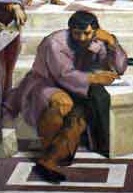
Anselm Kiefer, Nigredo, 1984
“What’s in the box?”

“Pain.” He felt increased tingling in his hand, pressed his lips tightly together.
How could this be a test? he wondered. The tingling became an itch.

The old woman said: “You’ve heard of animals chewing off a leg to escape a trap? There’s an animal kind of trick. A human would remain in the trap, endure the pain, feigning death that he might kill the trapper and remove a threat to his kind.”

The itch became the faintest burning. “Why are you doing this?” he demanded.

“To determine if you’re human. Be silent.”


— Frank Herbert, Dune


According to Wikipedia,

Nigredo, or blackness, in alchemy means putrefaction or decomposition. The alchemists believed that as a first step in the pathway to the philosopher’s stone all alchemical ingredients had to be cleansed and cooked extensively to a uniform black matter.

In analytical psychology, the term became a metaphor “for the dark night of the soul, when an individual confronts the shadow within.”

Now is the winter of investment bankers’ discontent. The long foreshadowed harrowing of my industry, the great winnowing of its inhabitants, is underway. The huge, tottering edifice of proprietary trading, structured products, and bespoke derivatives, which suckled at the twin teats of Greenspan’s largesse and investors’ desperation for yield in the age of negative real rates, will suffer the greatest harm. But the rest of us—innocent or not of the worst offenses of our industry—will suffer the fallout, too. Pay will be slashed, jobs will be cut—never to return—and egos will be racked upon the callous indifference of executives and shareholders more concerned with their own personal trials and tribulations than the suffering of their bought-and-paid-for minions.

Our enemies will rejoice. Spiteful, envious souls will gnaw greedily on the bitter bones of schadenfreude in cramped and narrow defiles, sucking out the meager marrow to satisfy their self-righteous, operatic anger. Let them. Those humans among us who remain, who survive—and rest assured, Dear Friends, some of us will survive—will remember.

O yes, Dearly Beloved, we will remember. We will remember our friends and enemies. We shall never forget.

Enjoy the show.


© 2012 The Epicurean Dealmaker. All rights reserved.

Sunday, February 5, 2012

Apocalypse, Ciao!

Insure this
Francie Stevens: “I’ve never caught a jewel thief before! It’s stimulating! It’s like... It’s like...”
John Robie: “Like sitting in a hot tub?”

— To Catch A Thief


Part of the real pleasure of the interwebs for me, O Dearly Beloved, is the occasional opportunity Your Muddle-Headed Correspondent has to engage in a stimulating conversation with one or more individuals who are clearly more intelligent, better read, and cleverer arguers than Yours Truly. I tend to gain a lot from such interactions, if only a better understanding of my own opinions and the limitations of my knowledge and intelligence. They tend to generate a crush of sensations, including excitement, the sheer terror of discovery that I am out of my depth, and an urgent desire to land a couple of cheap shots on the champion before I scramble out of the ring to safety.

Today’s reflections are inspired by the response Carolyn Sissoko made to my recent post on unlimited liability in finance. While I am not equipped to address some of her points—especially on the topic of what she sees as the increasingly pernicious use of collateral by modern financial intermediaries—I would like to venture a few remarks and intuitions, in the spirit of a novice fighter taking a couple tentative jabs at Mike Tyson. Hopefully she will be gracious enough to let me run away thereafter.

First, Ms Sissoko uses historical evidence (what’s that?) to demonstrate that a regime of unlimited liability is not necessarily inconsistent with low required rates of return on capital:

The system of unlimited liability banking grew up in an environment with usury laws, so interest rates (on short-term debt) did not exceed 5% per annum. Market rates often fell as low as 2%. It’s far from clear that low interest rates for borrowers are inconsistent with unlimited liability on the part of lenders who choose to use their ability to borrow to leverage their returns (i.e. to act as partial reserve banks).
But I think this point misses the thrust of my previous argument. My intuition about unlimited liability is that capital providers subject to it have a natural limit to the amount of credit they are willing to extend regardless of price. Each lender sets her individual limit based on her estimation of the likelihood of loss beyond initial capital invested. Beyond that there is no price at which she would be willing to lend. This certainly would be my preference: if I faced the loss of my home and possessions, penury, and utter ruination, you can damn well be sure I would not extend just one more loan to capture an extra fifty, hundred, or even thousand basis points of yield. I do not think I am alone among heartless, flinty-eyed rentiers in this regard. The historical evidence Andrew Haldane cites from early 19th century Britain is entirely consistent with this: compared to the situation today, banks were massively overequitized and highly liquid, and bank assets and hence lending were a very low proportion of the economy. If my intuition is correct, it may well be that prevailing market rates of interest during that period evidence less that capital was plentiful and demand fully satisfied and more that supply and demand were balanced in a regime of artificially limited supply. Certainly Mr. Haldane contends—based upon what, I do not know—that the system of unlimited liability was not capable of supplying the growing need for capital during the rapid industrialization of the mid 19th century.

I strongly suspect that if we attempted to reimpose a regime of unlimited liability on capital providers nowadays, the pool of capital available to the economy would shrink, and likely dramatically. People with capital would simply become unwilling to lend to or invest in risky projects beyond a certain point, and the evidence from 19th century Western industrial societies seems to indicate that point would be at a dramatically lower level than we have become used to over the past 70 years. Unlimited liability could well be massively contractionary. This, I assume we all can agree, would not be a good thing.

* * *

Second, Ms Sissoko rather loses me when she asserts that

from a theoretic point of view, a banking system doesn’t need capital, it needs trust (aka credit). If the institutional framework is carefully structured (that is, debts are enforceable, outright fraud is disincentivized/rare, etc.) there is no shortage of capital — capital is created out of thin air by a plethora of unsecured, but trustworthy, promises. Effectively, capital is cheap, because the institutional structure of finance reduces the risk of losses to a minimum.

It may be that the intestinal parasite (me) within the dinosaur simply cannot conceive of a world without dinosaurs or dinosaur intestines, but I don’t get this. Capital is, in my understanding, at base a buffer against loss. Perhaps capital and bank lending vanishes when you sum all of its offsetting accounts across the entire economy, but capital serves a very important protective function at the “local” level of real creditors and borrowers. Capital absorbs loss, and either stops or slows the propagation of that loss through the daisy chain of economic interrelationships economic actors maintain. It is like the collapsible drums filled with water at the top of a freeway exit, whose function is to slow or impede the destructive progress of a runaway car. Sure, a runaway car will eventually stop of its own accord due to friction and gravity—if not another car or building—but do we really want to conclude from this that crash drums aren’t desireable or necessary?

I presume Ms Sissoko would counter that, with appropriate care and attention, we could design freeways and perhaps even cars so that we need not worry about collisions or runaways, but I fear that implies a level of omniscience—and systemic rigidity—which I find hard to credit. Financial loss is triggered both endogenously and exogenously. Being unable to anticipate all the ways financial loss can occur and directions from which it can come, I would much prefer to have various pools of capital sitting around the system, hopefully helpfully positioned between me and disaster. Besides, without capital, how can we enforce incentives? Capital belongs to someone. I thought the point was to reduce unnecessary systemic risk by presenting those positioned to create the risk of loss in the first place with incentives not to do so recklessly. How else can we do this except by making them the first to bear that loss; i.e., lose their capital?

* * *

One of the most pernicious effects, in my opinion, of the evolution of limited liability in the financial system, and the consequent transfer of more and more tail risk to society at large, has been the weakening of our understanding of the price of risk. Now don’t kid yourself: society always stands as the loss-absorber of last resort, under any capital, economic, or financial regime, because there are some losses which are too large for any system to absorb. (Think about a kilometer-wide asteroid hitting New York City or Los Angeles, for example.) After all, financial losses happen to a society. But the drawback of risk assumed by government and taxpayers is that it is not explicitly priced. Leading up to the recent financial crisis, as financial actors’ capital at risk shrank and society assumed ever more tail risk, more and more of the spectrum of possible financial loss fell outside the capital markets’ risk pricing mechanisms. Risk, whether from risky investment projects, financial leverage, or whatnot, looked cheap because an increasing portion of it was not being priced. We all levered up and engaged in riskier activities because we thought those activities had somehow got less risky. Remember the “Great Moderation?” It turns out instead we were just hiding a lot of potential loss out of sight, in the Grandma’s attic of a taxpayer backstop.

I continue to maintain two important things about financial risk. First, that it is incompressible; that is, a certain level of risk is ineluctably tied to the pursuit of a particular level of returns. No matter how you slice it, you cannot reduce the risk associated with a certain return. If it looks like risk is lower than you anticipated based on past history, rest assured it has not declined. You have either transferred it to someone else (e.g., through derivatives, in which case you have transferred some of your return, as well), or you have just lost track of some of it (perhaps by shifting it onto taxpayers). Second, that the risk-return relationship obtains at a society-wide level, as well. It may very well be the case that we unknowingly assumed more risk than we are comfortable with as a society, because we lost track of some of it by shifting it outside the financial markets, unpriced, onto our own backs. We pursued a growth and consumption agenda that was a lot riskier, in retrospect, than we believed at the time. But lowering the risk of loss we are willing to accept as a society will have ironclad implications on the types of returns we enjoy.

Surely there is a happy medium between a low-growth, capital-constrained economy hobbled by unlimited liability to capital providers and the reckless bacchanal we financed with “other” people’s money up to the financial crisis.1 But make no mistake, the decisions we make about how we allocate, limit, and distribute financial risk throughout society—including how much to put financial intermediaries on the hook—will reverberate broadly through the system and ultimately affect our very living standards and prospects:

So part of the conversation we continue not to have in the public domain is what kind of returns—in the broadest sense—we desire for our economy and society, and therefore what level of risk we are willing to tolerate. Sure, we could turn the entire banking industry into a regulated utility, with mandated minimum equity levels, maximum allowed returns on equity, and limits on institutional size and interconnectedness (assuming we can understand, monitor, and control such parameters, which may be a slightly heroic assumption). But what knock-on effects would that have on investors, on businesses in search of risk capital for their growth projects, on consumers, and on the economy at large? Dampen the incentives and ability of financial intermediaries to originate, take on, and distribute investment risk, and it is not clear to me that overall risk-taking (i.e., investment) in the economy will not go down. But if that happens, are we not explicitly or implicitly settling for less growth and fewer wealth creation opportunities in the economy overall? Is that really the outcome we are seeking?

By this, I do not mean to say our current system works well, or that the level of risk inherent in the financial system is appropriate or even efficiently distributed given our overall economic return objectives. But it does mean that we need to be a little more thorough, and a little more honest with ourselves and our opponents in debate, in thinking about the consequences of individual actions or “solutions” we advocate imposing on financial intermediaries. For consequences will flow inexorably in directions we do not—and perhaps even cannot—anticipate, and we will be remiss—and even no less irresponsible than the people who allowed the recent financial crisis to happen in the first place—if we do not make provision to address them.

But cheer up. Things could be a lot worse.

Related reading:
Carolyn Sissoko, A little fear is a good thing (Synthetic Assets, February 4, 2012)
The Blind Men and the Elephant (June 21, 2011)


1 Oops. I guess it was our money all along, after all.

© 2012 The Epicurean Dealmaker. All rights reserved.

Saturday, February 4, 2012

Leverage This

What's your collateral?
Jessie Stevens: “It was exciting at first, but you know now I think it’s more exciting to have them stolen.”
John Robie: “Yes, because you can’t lose financially as long as Hughson is around to make out the check.”
Jessie Stevens: “Well I’d be crazy to take this attitude if I did.”

— To Catch A Thief


I have had an absorbing day thinking about moral hazard, unlimited liability, and the modern financial system, O Dearest and Most Inquisitive of Readers. My thoughts have been guided by two intriguing articles; one, a blog post by Carolyn Sissoko at Synthetic Assets in response to Steve Randy Waldman’s recent pieces on opacity in finance, and two, a speech given by Andrew Haldane of the Bank of England last October. Both have enlightened me immeasurably about the long-term history of banking and finance, of which, I am mildly chagrined to admit, I have apparently been woefully ignorant. Such are the shortcomings of a Modern Man of Action.

Having little to recommend me as a guide to the fields of financial history or economics generally, I will spare you my amateurish glosses on each of these pieces, and encourage you instead to read them yourselves. Suffice it to say that I found their narratives of the transformation of banking and other financial intermediaries from their original state as small partnerships sharing unlimited liability to today’s limited liability corporations fascinating. For one thing, I was unaware of the common intermediate step, which obtained from roughly the second half of the 19th century through the 1930s, in which bank shareholders were subject to “extended liability,” which required them to put up additional (but not unlimited) capital in the event it was required to meet the bank’s obligations. While this system—and the unlimited liability regime which preceded it—did not prevent the occurrence of numerous bank runs and financial panics during this period, Ms Sissoko contends that it performed pretty well as a shock absorber for the financial system. Bank losses hit bank shareholders and partners first, often with the effect of bankrupting them, and depositors were able to recover their monies, albeit with notable delays. Naturally, as one might suspect, having liability in excess of direct capital invested encouraged an excess of caution among banks in the loans they underwrote.

Andrew Haldane explains:

Bank balance sheets were heavily cushioned. Equity capital often accounted for as much as a half of all liabilities, while cash and liquid securities frequently accounted for as much as 30% of banks’ assets. Banking was a low-concentration, low-leverage, high-liquidity business. A broadly-similar pattern was evident across banking systems in the United States and in Europe.

This governance and balance sheet structure was mutually compatible. Due to unlimited liability, control rights were exercised by investors whose personal wealth was literally on the line. That generated potent incentives to be prudent with depositors’ money. Nowhere was this better illustrated than in the asset and liability make-up of the balance sheet. The market, amorphously but effectively, exercised discipline.

It was given a helping hand by market-based prudential safeguards. Directors of a bank had the capacity to vet share transfers, excluding owners without sufficiently deep pockets to bear the risk. Shareholders also maintained their liability after the transfer of their shares. This put shareholders firmly on the hook, a hook they then used to hold in check managers. Managers monitored shareholders and shareholders managers. In this way, the 19th century banking model aligned risk-taking incentives.

Given the common diagnosis of the recent financial crisis as arising, at least in part, from excess risk taking by commercial and investment banks due to misaligned managerial incentives and the (ultimately correct) perception that society would step in to cover bank obligations during a panic, it is tempting to view such a regime as preferable to the one we have now.

But before we force Jamie Dimon to sell his houses and cars to stem a run on JP Morgan, it is important to understand why unlimited and even extended liability banking was replaced. According to Haldane, unlimited liability proved “rather too effective as a brake on risk-taking” and insufficient to the provision of credit in the face of increased societal demands for “capital to finance investment in infrastructure, including railways.” Society’s demand for growth investment began to outstrip the appetite of the wealthy to provide it. Subsequent solutions—first, to extend unlimited liability to a broader shareholder base, and second, to cap liability at two to three times the investor’s initial investment—merely compounded the problem, by bringing in investors without the financial resources to sustain periodic losses and exacerbating panics by calling capital from investors under duress. Banks and other financial intermediaries like investment banks consolidated as their economies grew, and the span of control problem inherent in vetting ever increasing shareholder bases became unmanageable. So, by the 1930s, our current system of large, limited liability financial institutions with dispersed and anonymous shareholder bases was largely in place.

* * *

The question I am left with is the following: given that historical precedent (and common sense) seems to indicate that restricting banking to those wealthy enough to sustain personal losses well in excess of the amounts they invest in such activity limits credit provision, why should we believe there are enough risk-loving wealthy people nowadays to support the enormous credit demands of our national and global economies? To use a more limited example, why should we believe there are enough wealthy investment bankers eager and willing to support the capital requirements of ten mini-Goldman Sachs, each with one tenth the assets of the Vampire Squid? More importantly, where are the wealthy commercial and retail bankers eager and willing to support the lending activity of 1,000 mini-JP Morgans, each with one one-thousandth the assets of the House of Dimon? Certainly one can imagine there are lots of retail depositors and wholesale creditors who would be eager to lend to such personally backstopped institutions, but why would a shareholder with potentially unlimited liability—to the extent of her entire personal and family net worth—be remotely interested in borrowing ten times her equity in order to earn 12% on her money?

Hedge funds cannot fill the gap, either: they manage other people’s money. Why would those other people—mostly institutional investors like pension funds, insurance companies, university endowments, and the like—be remotely interested in assuming unlimited liability? For one thing, it would violate their own fiduciary duty: for the most part, it’s not their money, either. It’s firefighters’, teachers’, and pensioners’ money. Do you really think those people want to take unlimited risk? As Steve Waldman says, those people want safety.

Certainly there is a good argument for aligning the payouts and incentives of persons who engage in risky activities more closely with outcomes. It is a noble and desireable objective to undo the privatization of returns and the socialization of risk that we find ourselves plagued with nowadays. But I worry that those who argue for a wholesale return to unlimited liability for the owners of financial intermediaries simply have not thought out the problem of scale inherent in the current global economy.

Plus, I thought we all agreed we don’t like being under the thumb of the very rich. Do we really want to go back to Potter’s Falls?

Related reading:
Carolyn Sissoko, In defense of banking... (Synthetic Assets, January 30, 2012)
Andrew Haldane, Control rights (and wrongs) (The Bank of England, October 24, 2011)


© 2012 The Epicurean Dealmaker. All rights reserved.

Sunday, January 29, 2012

The Rape of Persephone

Don't worry. The bruises will heal.
I never saw a wild thing
sorry for itself.
A small bird will drop frozen dead from a bough
without ever having felt sorry for itself.


— D.H. Lawrence, “Self Pity”


Now that Mitt Romney is running for the GOP nomination for President, it seems everybody and his brother is taking a whack at the private equity piñata. James Kwak recently took his turn at bat, and James Surowiecki clocked a couple swings himself. To their credit, both of them do a halfway decent job describing the private equity model, but neither one can be characterized as a fan. Kwak fears that private equity is too tempted by lax and imperfect financing markets to loot the companies they buy and leave creditors and employees in the lurch, and Surowiecki is displeased that so much of the profit in private equity is subsidized by taxpayers. Both of their criticisms hinge heavily on the financial leverage commonly used in private equity investments, so it is worth reviewing the concepts and practices in a little detail.

Private equity firms (or financial sponsors, as they are more commonly known in the trade) normally raise funds from a collection of institutional investors (“limited partners,” or LPs) like state pension funds, university endowments, sovereign wealth funds, insurance companies, and other asset managers. The sponsoring firm acts as general partner for each fund, and has a fiduciary duty to the fund’s limited partners to invest their funds prudently, profitably, and in accordance with the fund agreement. Each fund is an independent legal entity which has a limited life—normally ten years—and the goal is for the private equity firm’s professionals to invest the monies available in a discrete number of majority, minority, or other investments in particular businesses. For each such investment, the sponsor expects to hold the investment for some period of years less than the life of the fund from which the money came, and when the time comes the general partner will sell the fund’s investment on behalf of the LPs and split the profits, if any, with them.

Now most financial sponsors tend to invest in majority, or “control” stakes in discrete companies. That means they purchase a majority of the voting control (and economic value) of a standalone business, and they work closely with the management of the purchased company to realize their investment objectives. Usually, the senior management of the purchased firm holds a substantial minority equity position in the company—normally subordinated to the financial sponsor’s stake, and often in the form of common equity shares and options—which aligns their interests and incentives tightly with the financial sponsor and their limited partners. Sponsors buy these companies wherever they can find them: from private owners, family founders, publicly traded companies, the subsidiaries of larger companies, etc.

* * *

Deeply simplified,1 a typical control buyout looks something like this: Financial sponsor Big Bucks LLC negotiates the purchase of Company ABC for $200 million through its new special purpose acquisition company New ABC. ABC earns operating cash flow, or EBITDA2, of $25 million per year, which means the purchase multiple, or total enterprise value3 to EBITDA multiple, of the business is a very healthy 8 times. Prior to, simultaneous with, or after closing the transaction, Big Bucks sources debt financing to help purchase ABC from one or more lenders, which may be investment banks, commercial banks, hedge funds, or any number of institutional investors. (Some of these direct lenders are the same or similar institutions that invest as limited partners with private equity firms like Big Bucks.) Let’s assume the lenders like ABC’s business and credit profile, so they are willing to lend a generous 5 times EBITDA or $125 million to New ABC to help buy ABC. Big Bucks puts up the balance required, $75 million, in the form of equity. (Pace Mr. Kwak, this is a far more common capital structure nowadays than the 80% debt/20% equity structure he posits in his article. In large part this is due to competition among buyers of corporate assets.) Big Bucks puts a few members of its deal team on the Board of New ABC, and it’s off to the races.

In a perfect world, Big Bucks would like to exit from its investment within three to seven years, having made a hefty return on its limited partners’ money. To do that, the equity value of the company must rise. If the sponsor can realize a final equity value in excess of its initial investment of $75 million, it wins; if not, it doesn’t. It’s as simple as that. There are only three basic ways the final equity value of New ABC can get bigger than the initial investment: the multiple on sale increases, the sponsor uses the company’s cash flow to pay down debt due, and/or the company’s earnings increase. (Remember the lenders must be repaid first, so the equity value is simply the residual of the sale proceeds after debt has been repaid or refinanced. If the debt balance declines—assuming the enterprise value remains the same—equity value must by necessity increase.)

Now the first value creation method—increase in the selling multiple—is almost entirely outside the control of the financial sponsor. It depends on market conditions at the time of sale, many years distant, and demand among buyers for New ABC. Sometimes the sponsor can tilt the field in its favor by buying the asset particularly cheaply, but the growth in the private equity industry itself and the increased competition among rival sponsors has made this opportunity increasingly scarce. In addition, sell-side advisors and investment bankers like Yours Truly do everything in our power to prevent any buyer, financial sponsor included, from buying companies cheaply. Much to private equity’s chagrin, we have gotten pretty good at it.

The second method requires the sponsor to use excess cash flow generated by the business (after it pays suppliers, employees, interest expense, and the like and invests required money in maintaining or improving capital assets and financing the company’s working capital needs) to repay the debt used to buy it. But given that financial sponsors typically try to minimize the amount of equity they put up in the first place (remember: their return on investment depends on having as small a denominator as possible), they usually load the business up with as much debt as prudently possible at the outset. This means, after accounting for cash operating expenses and required capital and working capital expenditures, the typical private equity investment has very little free cash flow to direct toward debt. Unless the company’s earnings and free cash flow increase, the only way to direct more cash toward debt repayment would be to starve capital expenditures, cut operations to the bone, and generally milk the property dry. This is the caricature of private equity as “vulture capitalism” which so many commenters condemn.

But this rarely happens, and almost never intentionally. Because remember: the private equity firm and its investors only make money if they take more money out than they put in. And starving a company of resources it needs to sustain and grow future earnings destroys value. Think about it: the next buyer of the company is almost certain to be a sophisticated buyer itself, and they will figure out pretty quickly if Big Bucks has permanently weakened New ABC’s earnings power. If so, it will pay less, and the reduced debt balance will likely be more than offset by the lower value it offers for the entire business. Levering up businesses with huge amounts of debt and making your equity returns primarily from the paydown of debt with excess cash flow was the old model of the leveraged buyouts of the 1980s. It only worked then because private equity firms could get businesses cheaper than they can now. Fierce competition has shut this sort of financial engineering down.

So the only reliable model for private equity to make the returns it promises to its LPs is to increase the earnings of its portfolio companies. And that is what they all try to do. Sure, a lot of this involves cutting costs, and labor costs are often one of the biggest line items in company income statements which can be trimmed. But private equity also looks to improve the sales and margins of its companies, and this often entails increased investment in productive assets, company infrastructure, and, yes, employees. Many financial sponsors invest additional cash in their portfolio companies over the life of their investment, in order to support increasing sales, improved productivity and margins, and occasionally add-on acquisitions. Their objective is to make the company stronger and healthier than it was when they first bought it, and hence more valuable. Financial sponsors frankly don’t care whether increasing EBITDA and free cash flow comes from cost-cutting or revenue and margin increases—a dollar is a dollar is a dollar, after all—but most of them are fully aware that the latter is normally sustainable in a way the former is not.

* * *

One more wrinkle is worth discussing. This is the relatively recent phenomenon of financial sponsors borrowing additional debt through their portfolio companies during the life of their investment, and using the proceeds to pay equity dividends to themselves and their limited partners. These are known as dividend recapitalizations, or “dividend recaps.” Often, financial sponsors can use such recaps to withdraw money equal to or even in excess of their initial equity investment. This leaves the portfolio company with an increased debt burden and the financial sponsor playing with house money. Many people outside the industry, including our friends Messrs. Kwak and Surowiecki, don’t like dividend recaps, because it loads up the portfolio companies with risky debt while appearing to reduce private equity’s skin in the game. This is very true.

However, having participated in or observed a number of such deals, I must strenuously disagree with Mr. Kwak’s contention that the lenders which participate in such transactions are unsophisticated dupes. They lend with eyes wide open, after having done an impressive amount of company-specific due diligence. Normally, a company is able to take on a bigger debt load because the financial sponsor and company management prove to new lenders that they have improved the company’s earnings power and free cash flow enough to sustain it. In our example, if Big Bucks had sustainably boosted New ABC’s EBITDA from $25 million in year one to $50 million in year three, the same lenders who lent at 5 times EBITDA at the beginning should be more than happy to lend another $125 million to New ABC. Big Bucks could dividend the entire amount to its limited partners and itself, and still have a company with a pro forma value (at 8 times EBITDA) of $400 million, a pro forma debt load of $250 million, and a pro forma equity value of $150 million after the $125 million dividend. Big Bucks’ initial investment of $75 million would have turned into $275 million: $125 million of dividended cash and $150 million of unrealized equity value. This would be an enormous home run, and it still gives Big Bucks and its limited partners an opportunity to ride the value creation curve of New ABC even higher into the future. Leveraged finance lenders are very comfortable with such transactions, and they base their comfort on the visibility and sustainability of company results, and the credibility of the financial sponsor and portfolio company management to sustain and build earnings and cash flow.

Sometimes, of course, the future performance of a private equity company falters unexpectedly, and the debt load craters it. But this happens as often with the initial capitalization of a private equity investment as with one that has had a dividend recap. Sophisticated financial sponsors are not infallible, and neither are sophisticated institutional lenders. Mistakes are made, market and company conditions change, and sometimes earnings can’t keep pace with debt service. Bankruptcy happens, lenders lose money, and employees are laid off. This is a bad outcome, and one which hurts financial sponsors and their investors too. Fortunately, it is relatively rare; rare enough that lenders continue to make such loans and limited partners continue to invest their money with financial sponsors.4 It is also worth keeping in mind that this happens in Corporate America, as well. Financial risk and bankruptcy from excess leverage is not exclusive to the private equity industry.

* * *

Private equity, as I have said many times before, is a valuable part of the financial ecosystem. It is particularly suited to helping businesses which require some sort of transformation, in structure, methods, and/or capital, in order to improve their value. All of these transformations are very difficult if not impossible to accomplish in a publicly owned company which answers to multiple, often conflicting constituencies in the full glare of public attention. For that reason alone, financial sponsors are a useful subset of capital providers, because they work their magic in private. As Mr. Surowiecki points out, they are not net job creators (or destroyers) of any magnitude. But they are not asset strippers, “vultures,” or liquidators, either. Think of them instead as boot camp drill instructors, whipping out of shape or underperforming laggards into top-flight athletes. Sure, they have their failures, but on the whole they do a pretty good job for a bunch of undersocialized ex-investment bankers.

Like every other corporation in America, private equity does benefit from the tax deductibility of corporate debt interest, but, pace Mr. Surowiecki, this loophole is not the secret sauce in private equity’s formula.5 As for the unconscionable and indefensible carried interest tax break private equity gets treating its earned income as capital gains for tax purposes, well, the less said about that the better.

I am trying to keep this a friendly blog post.

Related reading:
James Kwak, What Is Private Equity? (The Baseline Scenario, January 27, 2012)
James Surowiecki, Private Inequity (The New Yorker, January 30, 2012)


1 This example would count as a small, or small “middle market” buyout. While lots of these actually get done, I am using this scale to keep the numerical intuitions simple. In outline, the big buyouts you read about in the financial media look just the same.
2 Earnings Before Interest, Taxes, Depreciation, and Amortization. Don’t ask.
3 Total enterprise value, or TEV, is what the entire business is worth, prior to carving up the resulting cash flows to various stakeholders like lenders and equity owners. It is independent of capital structure.
4 It is worth noting, as I alluded to above, that many of the institutions which lend directly or indirectly to private equity-owned companies also invest as limited partners alongside sponsors. On top of that, many of these institutions happen to be funds managed for the benefit of public and private pensioneers, government employees, teachers and firemen, and other universally regarded good causes. It is a funny fact of private equity bankruptcies that the end result can be value transfer among these different groups.
5 Supplementing my simple example above with a few unremarkable assumptions about earnings growth and free cash flow efficiency, I ran a simple buyout model for New ABC over a five year horizon to test the magnitude of value created by the tax shield generated by debt. Allowing the tax shield, as current tax law does, created an final equity value of $223 million, or 2.97 times Big Bucks’ initial investment, and an internal rate of return of 24.3%. Stripping the tax shield from the same model generated figures of $199 million, 2.66 times, and 21.6%, respectively. While the free cash flow of $23 million over five years generated by the tax shield is nothing to sneeze at, it is dwarfed by the returns generated by growth of the business, and a 2.7% difference in IRR is unremarkable. Similar scaling applies to most private equity investments. The tax shield of corporate debt, while real, is not critical or even a major factor in private equity’s business model.

© 2012 The Epicurean Dealmaker. All rights reserved.

Reflections Upon an Occasion of Little Consequence

Sandro Botticelli, Primavera, ca. 1482

I. Death
Many times man lives and dies
Between his two eternities
That of race and that of soul
And ancient Ireland knew it all.
Whether man dies in his bed
Or the rifle knocks him dead,
A brief parting from those dear
Is the worst man has to fear.

Though grave-diggers’ toil is long,
Sharp their spades, their muscles strong,
They but thrust their buried men
Back in the human mind again.
1

II. Remembrance
Irish poets learn your trade
Sing whatever is well made,
Scorn the sort now growing up
All out of shape from toe to top,
Their unremembering hearts and heads
Base-born products of base beds.
Sing the peasantry, and then
Hard-riding country gentlemen,
The holiness of monks, and after
Porter-drinkers’ randy laughter;
Sing the lords and ladies gay
That were beaten into the clay
Through seven heroic centuries;
Cast your mind on other days
That we in coming days may be
Still the indomitable Irishry.
2

III. Life
... A living man is blind and drinks his drop.
What matter if the ditches are impure?
What matter if I live it all once more?
Endure that toil of growing up;
The ignominy of boyhood; the distress
Of boyhood changing into man;
The unfinished man and his pain
Brought face to face with his own clumsiness;

The finished man among his enemies? —
How in the name of Heaven can he escape
That defiling and disfigured shape
The mirror of malicious eyes
Casts upon his eyes until at last
He thinks that shape must be his shape?
And what’s the good of an escape
If honour find him in the wintry blast?

I am content to live it all again
And yet again, if it be life to pitch
Into the frog-spawn of a blind man’s ditch,
A blind man battering blind men;
Or into that most fecund ditch of all,
The folly that man does
Or must suffer, if he woos
A proud woman not kindred of his soul.

I am content to follow to its source
Every event in action or in thought;
Measure the lot; forgive myself the lot!
When such as I cast out remorse
So great a sweetness flows into the breast
We must laugh and we must sing,
We are blest by everything,
Everything we look upon is blest.
3

IV. Coda
... Now that my ladder’s gone
I must lie down where all the ladders start
In the foul rag and bone shop of the heart.
4

1 From W.B. Yeats, “Under Ben Bulben.”
2 Ibid.
3 From W.B. Yeats, “A Dialogue of Self and Soul.”
4 From W.B. Yeats, “The Circus Animals’ Desertion.”

© 2012 The Epicurean Dealmaker. All rights reserved.