Saturday, February 23, 2008

Survey Course

Professor Anton Chigurh presidingProbability 105 – This introductory course uses readings, exercises, and perspectives from disparate fields such as film, literature, mathematics, and finance to place probability theory in a general intellectual context.

Required for all undergraduates. No auditors. Pass/fail only.

Literature:
Once initiated in the mysteries of Baal, every free man automatically participated in the sacred drawings, which took place in the labyrinths of the god every sixty nights and which determined his destiny until the next drawing. The consequences were incalculable. A fortunate play could bring about his promotion to the council of wise men or the imprisonment of an enemy (public or private) or finding, in the peaceful darkness of his room, the woman who begins to excite him and whom he never expected to see again. A bad play: mutilation, different kinds of infamy, death.

— Jorge Luis Borges, The Lottery in Babylon

Mathematics:

Assume a coin toss game, using a fair coin, which results in an outcome of either “heads” (H) or “tails” (T), each of which has a one-in-two chance of occurring. The outcome of any one coin toss is independent of any and all other coin tosses. Answer the following questions.
Q: What is the probability, ex ante, of tossing the following sequence?:
HHHHHHHHHHHHHHHHHHHH
A: 1/220, or less than one in a million.

Q: Having tossed the sequence in the preceding question, what is a) the probability of tossing heads on the next throw? b) Tails?

A: a) 50%. b) 50%.

Q: Which of the two following independent sequences of results is more likely?:
HHHHHHHHHHHHHHHHHHHH
HHHHHHHHHHHHHHHHHHHT
A: Neither. They are equally likely.

Q: Now assume that Steve Cohen of SAC Capital is tossing the coin. Does this fact change any of your preceding answers?

A: Hey! That’s not a fair question!
Correct.

Film:
“You need to call it. I can’t call it for you. It wouldn’t be fair.”

“I didn’t put nothin’ up.”

“Yes, you did. You’ve been putting it up your whole life. You just didn’t know it. … You know what date is on this coin?”

“No.”

“1958. It’s been traveling 22 years to get here. And now it’s here. And it’s either heads or tails. And you have to say. Call it.”


No Country for Old Men

Finance:

Ultimi Barbarorum:
So for my third and final major point, we have to recognise that we don’t really know, in the absence of any measurable standard of beta, what is fake and what is true alpha. We don’t really know what it is that drives certain individual traders’ persistent returns over long and [ephemeral] returns over short periods. We come back to the older distinction of “luck” and “skill”, and defer to Napoleon’s Law, that, in the absence of empirical data on skill, persistent luck is the best quality to look for in a general, and in a trader. Which makes it all the more reasonable to pay up for it, and, on the part of the bank, to pay up if a single trader has a good year, for now that trader is more likely to be one of the few who may do well the next, who have that magic persistence. That fat bonus is the bank paying up for the option on that guy, rolling him over to next year by paying his opportunity cost, and in that sense is perfectly rational behavior.
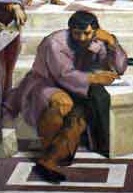
Even simple coin toss games are subject to rather longer and more frequent runs of sequential heads or tails than we naively expect. Ask someone to manufacture what they suppose to be a random series of coin tosses, and most people will create a sequence which alternates very frequently between heads and tails and which has a rather even distribution of results. Actual coin toss sequences usually look far less random than their invented cousins.

Investing is clearly a game that is far more complex and subject to dramatically more causal factors than tossing a coin. However, no sane person would deny that chance must play some sort of role in an investor's results. Baruch identifies a factor he calls “persistence” in a trader’s superior returns. Does that mean that outcomes in sequential investing games are not independent? That winners tend to win? If so, why? Is this the result of skill, momentum, reputation, confidence?

Or are we looking at a dramatic case of survivorship bias, where the most successful (lucky) investors are the few among many that we focus on, send money to, and try to emulate simply because they have been successful? Are these wizards of finance only one or two coin tosses away from failure, ignominy, disgrace?

* * *

It’s happened before.

The roll call of former investing greats is long and getting longer. Julian Robertson, George Soros, etc. once bestrode the markets like titans. Now they invest in golf courses and harangue mid-level NGO delegates in sleepy Swiss ski-towns. What happened to these former greats? Did their apparently formidable investing skills falter in the face of changing market conditions? Did their luck run out? Did they just get tired?

They have been replaced in the investing pantheon by Young (and not-so-young) Turks who seem to crop up reliably to titillate the masses and sell newspapers: Steve Cohen, Ken Griffin, John Paulson. Even now, as these few bask in the sun, thousands of thirty-something would-be übertraders are jostling on the Market Escalator for the right to become one of the new bold-faced names with billions at his command and the breathless admiration and envy of all the world. But there are only a few slots available. Who will make it to the top? Who has the skill? Who has the luck?

Who are you going to bet on?

Call it, Friend-o.


© 2008 The Epicurean Dealmaker. All rights reserved.

Tuesday, February 19, 2008

The Fascination of What's Difficult

"The truth is that a mastery of literary and philosophical texts and the acquisition of wisdom (in whatever form) are independent variables."

Stanley Fish

The truth is that "independent variables" in the preceding sentence is content-free pseudo-mathematical hogwash.1 Nevertheless, hopefully you get the otherwise valid instructional point.

1 A common intellectual failing and pretension in days such as ours, which are marked by the apotheosis of Science and Mathematics over common sense and—yes—wisdom; q.v. those current exemplars of human folly: hedge funds, quantitative, and economics, non-behavioral.

© 2007 The Epicurean Dealmaker. All rights reserved.

Thursday, February 14, 2008

Herding Cats

John Kay produced an interesting commentary over at the Financial Times earlier this week, in which he tried to explain the current banking crisis by reference to identity politics and group think. His central argument is that bankers got caught up in counterproductive behaviors—like originating toxic CDOs and mortgage-backed securities and flogging them to befuddled widows and orphans—because they wanted and needed to go along with everyone else at their firms and in the industry who were doing the same thing.

Yves Smith, of Naked Capitalism, doesn't quite agree:
A lot of readers would probably differ; incentives like performance pressure and annual bonus schemes would seem sufficient to explain the short-sightedness of investment bankers. And recall when the firms were partnerships, the aggression in the lower ranks was checked by the owners whose capital was illiquid, which required them to take a longer-term, more deliberate stance. But it is true that the industry favors people who have a can-do attitude and are not prone to introspection, which may make them more susceptible to group-think than most people.

Well, at least Yves got it right about bankers' character.

Anyone who has ever had dealings with investment bankers can vouch for the fact that they are a congenitally optimistic bunch. No situation, security, or deal is impossible, overpriced, or unattractive; every client is charming, intelligent, and handsome to boot. This attitude, of course, is a defense mechanism, designed to help the banker cope with the usual state of affairs, in which few if any of these conditions apply. Indeed, if persons attracted to investment banking have an innate fault in this regard it is that they cannot recognize when conditions are so bad as to be irredeemable, and further effort is therefore useless. Recognizing this, and learning to pass the leadership (and workload) for such hopeless cases on to another (usually junior) associate, is a critical career step in the maturation of a senior banker.

It is also true that investment bankers are a remarkably unreflective bunch. They have neither the time nor inclination to ruminate, contemplate, or introspect concerning their clients, deals, or careers. All these the banker takes as given, and it is his sole job to monetize them all to the greatest extent possible for the greatest pecuniary reward possible. Should he fail in this regard, or display an excessively philosophical or contemplative bent, his superiors will look askance and begin to size him up for a wooden box.1 Homo investmentbankibus is not interested in "Why?" He is only concerned with "How," "When," and "How much?"

But these traits do not mean that the average investment banker is particularly susceptible to group think. With the possible exception of the colony organism known as Goldman Sachs—which prides itself on molding its diverse and talented workforce into the kind of uniform, efficient automatons last seen during IBM's heyday in the 1960s—most investment bankers I have known over the years view themselves, to a greater or lesser extent, as rugged individualists. While they may take pride in the institution they work for—if in fact it has a good reputation—they are almost always firmly convinced it is their own talent and genius which explains their personal success. Therefore, the typical investment banker is anything but a yes-man who parrots the party line of his or her organization. He practices his craft according to his own beliefs and ideas, and he suffers direction from his superiors only intermittently, reluctantly, and ungraciously. Not for nothing is managing investment bankers likened to herding cats.

Furthermore, the higher up in the hierarchy a banker gets, the greater the percentage of his or her workday is consumed with open and concealed battle against the other investment bankers at his or her own firm. Much of life for senior bankers and executives consists of claiming credit for good deals and good decisions and avoiding blame for bad ones. This is serious stuff, because you get paid a lot of money for the former and can lose your job over the latter. This, of course, sets you at odds with your supposed partners and colleagues, and the rivalries, feuds, and power struggles within most large investment banks are usually far more pitched and vicious that those between bankers at rival institutions.

For anecdotal proof, I would point you to the recent profile of someone who used to be a banker, before he toddled off to rape and pillage on a larger scale:

As one former Lehman banker describes the firm, “It was survival of the fittest. You produced the business and then you fought over the proceeds. It was every man for himself.” Bruce Wasserstein, then at First Boston, and soon to be regarded as the leading mergers-and-acquisitions banker on Wall Street, said to Eric Gleacher, the head of M. & A. at Lehman, and [Steve] Schwarzman, “I don’t understand why all of you at Lehman Brothers hate each other. I get along with both of you.” To which Schwarzman replied, “If you were at Lehman Brothers, we’d hate you, too.”

(Lehman, by the way, was renowned during Schwarzman's time as one of the nastiest snake pits in the business, composed of bankers with the sharpest knives and the most scars on their backs of any in the industry. But it was only an extreme example of behavior seen all over Wall Street and the City, both then and now.)

No, if there is a type of group think on Wall Street, it is of a particularly simple and unconstraining kind: make money. It's that simple. You make money in investment banking nowadays in two ways: by being an agent, or intermediary, for capital flows among sources and users of capital, and by being a principal, or investing for your own account. In the latter case, you look like any other investor out there, and are subject to the same opportunities and constraints. (Lucrative, but boring.) In the former case, you make money by arranging, executing, and taking a cut of other people's transactions.

Now, if you can find or invent a better way to satisfy your customers' needs—CDOs, credit default swaps, Super-Duper Slice-and-Dice Riskomatic derivatives—you can bet they will beat a path to your door. But the half life of innovation on Wall Street is miniscule, because within a week of putting out a new doohickey six of your competitors have reverse-engineered the dingus and are out flogging it to their clients and yours. Investment bankers do tend to move in a herd, but that is because they are all following the bigger herd of investors with all that lovely money, and it is easier and faster to tinker around the edges of existing technology than to create something really new.

Yves Smith does get something right. There was group think leading up to the current crisis, all right, just not among the investment bankers:

Kay's observation has some merit, but I think it applies more to the money managers and other investors who bought dubious paper more than it does to the perps.2 They were surrounded by peers who were buying complicated new products that offered higher returns; being skeptical suggested one was a Luddite, or worse, not up to snuff analytically (not that anyone did much analysis, as we have now learned).

It was not for the investment bankers to tell their customers that they were wrong to want higher returns and lower risk, even if the two could not be safely combined. It was their job to try and provide those things, because that's what the customers paid them for.

And the customer's always right, no?

1 Yet another reason why, Dear Readers, your Dedicated Correspondent conducts his public philosophizing under the cloak of anonymity. This also explains why I have so few senior investment bankers among my readership. Well, okay, that and the fancy words.
2 "Perps," as in perpetrators, as in everyone knows that those mean old investment bankers were evil devils who literally force fed toxic securities to those poor, innocent institutional investors who had absolutely nothing to do with their own corruption. Thanks, Yves. Consider yourself stricken from the rolls of us perps.

© 2008 The Epicurean Dealmaker. All rights reserved.

Thursday, February 7, 2008

Does This Profile Make Me Look Fat?

FBI Case File 0932074G – Exhibit 36:

The following is an annotated1 transcript of a telephone conversation recorded on Thursday, February 7, 2008 between one Stephen A. Schwarzman and an individual identifying himself as "The Epicurean Dealmaker." All dialogue transcribed verbatim.

Hello?

Hey, TED, it's Steve.

Stevie! Howya doin' babe? Hey, you know, I asked you never to call me here.

Sorry, I know, but I have to talk to you about something right away.

Alright. Shoot.

Thanks. Hey, listen, before I get started, I just want to thank you for not writing any more nasty articles about me in your blog. You were really getting under my skin for a while there, you know.

I know. You're welcome. Thank you for sending Francesca over as a "peace offering."

No problem. She's some firecracker, isn't she?

Yeah. Now, what did you want to ask me?

Oh, yeah. Did you see the profile on me in this week's New Yorker?

Uh, yeah.

Well? Whadja think?

Not good, Steve, not good.

Really? I kinda liked it.

No, Steve. It makes you look like a fathead.

Oh. ... Anything else?

Yes: monomaniacal, driven, aggressive, tightfisted, greedy, controlling, hyper-competitive, miserly (to others), obnoxious, obsequious to superiors, self-aggrandizing, pigheaded, tyrannical, abusive, sensitive to criticism, and desperately needy for recognition.

Is that all?

Well, to be fair, you also came across as focused, smart, successful, and immensely wealthy.

Good.

You and your publicist could have done a better job getting your friends to testify to your positive character traits, though.

Really? What do you mean?

Well, it's gonna be difficult for the average reader to believe you're a good guy when the only "friends" who gave you positive testimonials for attribution are people who want money from you, like the President of Yale, an M&A lawyer, and legendary brownnoser Jimmy Lee.

Hmm. I see your point. Do you think it's too late to pay some more folks to say nice things and have The New Yorker print a correction?

Unfortunately, yes.

Okay. Next time, maybe. What else did you think?

Well, I've gotta be honest with you here, Steve. A lot of my friends and colleagues on Wall Street and in private equity are pretty pissed off. I mean, it's one thing when Andrew Ross Sorkin takes a swipe at you, or even when I yank your chain in my blog, but it's entirely another when Jimmy Stewart crucifies you in The New Yorker. I mean, shit, man, that's the fuckin' magazine of record for the intelligentsia in this country. You can bet all your old foes are refreshed and rearmed, and gunning for you.

But I thought Stewart was pretty fair. Did I miss something?

Well, no, he didn't really crucify you himself, he just laid out the cross and the nails and offered you a hammer. It appears you did the rest yourself.

Oh.

And—here's the point, Steve—you have now proved beyond a shadow of a doubt to everyone who suspected it that Wall Street, private equity, and hedge funds are crawling with arrogant, self-absorbed, and greedy bastards who will stop at nothing to bank more coin than the entire of Sub-Saharan Africa could spend on food and shelter for the next millenium just in order to enjoy $400 crab claws and more top end real estate than the Sultan of Brunei.

[silence]

The rest of us were kinda trying to keep that a little quiet.

Sorry.

Yeah, well. And by the way, what's with the "I don't feel wealthy" gag? Who did you think you were fooling with that one?

Well ... I kinda thought it made me sound like a regular guy and all. You know: humble.

Humble?! $125 million in real estate humble, or $4.4 billion in Blackstone stock humble? Oh, by the way: sorry about the stock price. That's a bummer.

Yeah, tell me about it. Fuckin' Michael Klein. I shoulda listened to you about him. Fucker.

Never mind. You weren't the first, and you won't be the last to get taken in by that poisonous little cherub.

Yeah.

No offense, by the way. ... I mean, about the "little," and all ...

Don't worry about it.

Hey, listen. Francesca's coming out of the shower now, so I gotta go.

Yeah, yeah. Go ahead.

But really, don't feel too bad about it. Henry Kravis and Ken Griffin are big boys, and they and their buddies can take care of themselves. Hell, you should all just chip in for travel expenses and send David Rubenstein to Washington for a few months. He'll talk 'em to death. He'll give 'em a "course in remedial English." Hah-hah.

Hah-hah.

And besides, no-one ever liked investment bankers anyway, not even you. So you really haven't done us too much damage. Who knows? Once they read that we're all working like slaves for assholes like you, maybe we'll even get a little sympathy.

Yeah, fuck you, asshole.

But seriously, now. You've got some fence-mending to do with your fellow members of The Tribe who work on Wall Street. I've heard from a lot of them who think you just blew a hole in their image a mile wide. I just got an e-mail from one of them about you today. You wanna hear what he says?

I guess.

He says: "If that asshole Schwarzman is still looking for places to give away some of his money, tell him he should start with the UJA and the ADL. That meshugenah fucker just set back our cause by twenty years."

Harsh.

Tell me about it.

Okay. Well, thanks for the feedback, I guess.

No problem. Say, maybe you should fire Tony James again today. That always cheers you up.

Yeah, I'll think about it. See ya.

See ya. Hey, and Steve, you realize this means I'm gonna have to start blogging about you again. I've got my street cred to protect.

I understand. I sort of expected that. Say "hi" to Francesca for me.

I will.

Oh, and ask her for me, when you get a chance, if she ever got that nasty infection cured.

What?

[click]

1 Update: At the request of the Supervising District Officer, links have been added to the transcript to provide background references to case officers unfamiliar with the highly insular and claustrophobic world view of the two subjects. Full translation would require a lifetime subscription to financial industry "fan mags" like The Deal and The Wall Street Journal, which is strenuously discouraged.

© 2008 The Epicurean Dealmaker. All rights reserved.

Wednesday, February 6, 2008

The Strait of Messina

A thing I never know, when I'm starting out to tell a story about a chap I've told a story about before, is how much explanation to bung in at the outset. It's a problem you've got to look at from every angle. I mean to say, in the present case, if I take it for granted that my public knows all about Gussie Fink-Nottle and just breeze ahead, those publicans who weren't hanging on my lips the first time are apt to be fogged. Whereas, if before kicking off I give about eight volumes of the man's life and history, other bimbos, who were so hanging, will stifle yawns and murmur 'Old stuff. Get on with it.'

I suppose the only thing to do is to put the salient facts as briefly as possible in the possession of the first gang, waving an apologetic hand at the second gang the while, to indicate that they had better let their attention wander for a minute or two and that I will be with them shortly.


— P.G. Wodehouse, The Code of the Woosters

One of the existential pleasures of publishing an anonymous blog with comments disabled is that both the writer of said blog—Yours Truly, in this instance—and his or her audience—yourselves, of course, my Dear Readers—share a mutual ignorance of each others' identities, condition in life, and choice in hair products which is so breathtaking in its purity as to put shame to the proverbial inhabitants of Plato's Cave as dissembling prevaricators who have stolen the answer key to their freshman year metaphysics exam.

Now, being the sole responsible party for the anonymous nature of this relationship, you may presume correctly that in general I find it both natural and just. Not only do I find my readers' ignorance of my particulars convenient in the larger sense of preventing the tasteless nuisance of frequent lawsuits from those among the Great and Good I have publicly libeled, but also quite effective at deflecting the frequent inquiries I would no doubt otherwise receive from the teeming masses concerning my choice and recommendations in haberdashery, hair tonics, and personal lubricants. [Manufacturers of same should contact me directly to negotiate lucrative promotional arrangements.]

However, owing to my keenness of intellect and the awe-inspiring deductive powers I have employed in your service over the past year, I have noticed one tiny drawback to this arrangement: I have no fucking clue who any of you are.

Of course, I flatter myself in believing that each of my scribblings is deciphered as the Delphic utterance it is by the combined Executive Committees of every Global Investment Bank on the planet as well as the Joint JD/MBA/PhD programs of every leading educational institution that matters, in addition to second-rate degree mills on the Charles River and elsewhere. But that, if my finger tally is correct, accounts for only 16 of my regular readers. Who the hell are the rest of you? For that matter, why do you persist in reading a blog which requires 20 years of investment banking experience, an IQ of 210, and a bottle of single malt scotch to interpret properly?

Well, anyway, one might as well ask who's gonna win American Idol this season. Besides, if this blog sells even a couple more Merriam Webster dictionaries and causes even one benighted ignoramus to understand just a little more about the arcana of global finance—at least until he sobers up—I can count my good deed accomplished for the month. So, in that spirit, and, following the example of that most moral, perspicacious, and serious of first person narrators in the English language—videlicet, Bertram W. Wooster (q.v., above)—I offer to those among you deficient in the financial arts the following ruminations on that most hoary and troubled of topics, stock market valuation.

As Bertie recommends above, I encourage the 16 of you who just groaned "Get on with it" to wander off for a minute or two while I lay these few pearls before the unwashed and attempt to get them to grunt. I am sure you can occupy the interval until my next blog post by grading a few PhD theses or burying a few toxic CDOs in your employees' bonus accounts. So quit your moaning, and piss off.

* * *

Stock market valuation.

Now there's a kettle of fish, and no mistake. In fact, on second thought, it is an entire ocean of fish, one so vast, mysterious, and slippery as to keep a virtual army of investment bankers, management consultants, and PhD candidates in Osteichthyes up to their earlobes for the indefinite future. Unfortunately—or, if you are like me, one who earns his daily bread by interpreting these mysteries, fortunately—valuation is a topic in which the otherwise intelligent can easily lose their way.

Exhibit A for today's class comes from law professor and my soon-to-be-best-drinking-buddy Frank Partnoy, who wrote in Monday's Financial Times about Microsoft's recent bear hug offer for Yahoo. After pointing out the $20 billion haircut Microsoft's market capitalization took in an up market last Friday after announcing its offer, he poses an interesting question:

Why would a smart leader agree to sacrifice so much of Microsoft's, and his own, share value? Although the deal raises many interesting antitrust, economic and technology issues, it also illustrates the central conundrum of modern business strategy: should corporations focus more on short-term share prices or long-term value? Put another way, the question is: should we trust markets or managers?

Whereas finance theory posits that managers should focus on share prices, today's managers see radical stock price volatility as a source of danger, not discipline.

According to this view, modern CEOs are like sailors in Greek mythology: they must shoot the gap between a high perch of mania and a whirlpool of panic. To maximise the long-term value, they must steer clear of short-term price pressures.

If I interpret Professor Partnoy correctly, I believe he is asking whether we should assign greater credence to the judgment of managers or markets when it comes to valuation questions. Like, for instance, whether Microsoft buying Yahoo for $45 billion is a good idea or not. But this is a false question.

There are several factors at play here. First, I think most of us would concede that the senior managers of your average company have the best knowledge (or best educated opinion) about the short-, intermediate-, and long-term operating and financial prospects of their business. (That may not be saying much, and it ignores the incontrovertible evidence of far too many companies where a comatose dyslexic squirrel would know more about the firm's prospects than the overcompensated buffoons who are nominally in charge, but let that be for a moment.) You know: expected sales growth, market share, operating expenses, profit, etc., etc. They have the best visibility of anyone as to the potential investment opportunities for the business, too, whether those opportunities consist of capital investments in new or existing business lines or the potential acquisition of another business. (After all, M&A is just another form of capital investment, where you buy a business already in operation, rather than building it from scratch.)

This is a relatively straightforward sort of knowledge, one we can understand from our own experience and one we can imagine we would have if we were in those managers' shoes. Furthermore, if they are competent and responsible, this is knowledge the senior management of a business with public stakeholders takes care to communicate to its investors, subject to the usual limitations on withholding sensitive competitive information. Investors take that information, if they are smart, and incorporate it into their investment decisions to buy and sell that company's securities. So far, so good.

But this is the key point to emphasize here: information about the operating and financial prospects of the business in question becomes an input to the price discovery mechanism which the market uses to determine the company's stock price, and only one input among many, at that. What, pray tell, are the other inputs which go into this price discovery mechanism? Here is a partial list, to which I am sure anyone you might ask would be happy to add several of their own favorites:

  • The apparent conviction with which management conveys the business prospects of the firm to investors;

  • Management's credibility with investors (in other words, we may believe that management believes what they are telling us, but do we?);

  • Investors' perception of the attractiveness to the company of the competitive and operational environment in which it operates;

  • Investors' perception of the attractiveness of the general economic environment in which the company operates, and its potential effects on the company's future operations;

  • The relative attractiveness of other investments which might substitute for an investment in the company's securities;

  • The scarcity or plenitude of the company's shares available for buying or selling, and other "technical" factors;

  • The complicated function which aggregates individual investors' risk and return preferences;

  • The general level of interest rates and expected inflation;

  • The price of corn in China; and

  • My personal favorite, animal spirits.

In other words, there is a hell of a lot of information, analysis, and sheer bloodymindedness on the part of a very large number of individual investors acting independently on available information and their own opinion and analysis which gets distilled into one rather uncommunicative number for every company with shares trading in the market: its share price. Therefore, I find it rather heroic of Professor Partnoy to assert that

[the negative] market reaction was that ... Microsoft is digging a massive financial hole by overpaying for Yahoo.

Really? Did he talk with everybody before he came to that conclusion?

* * *

The fact that the overall market was up, and investor perceptions of general market, economic, and interest rate risk seemed to be rather benign on the day in question, does allow us to plausibly eliminate a number of potential explanations for Microsoft's stock plunge, explanations which CNBC would normally summarize for their listeners as "a crappy day in the market." Furthermore, the fact that Microsoft seems to be planning to finance its bid with a combination of cash on hand and new borrowing neatly eliminates the usual explanation of merger arbs buying the target stock and shorting that of the acquirer in proposed stock-for-stock deals. (A textbook example of one of those "technical" factors which I mentioned above.) 1 But there are a number of alternative explanations which I could find just as compelling if not more so than the one put forward by my buddy Frank.

Perhaps investors saw Microsoft's bid for Yahoo as a final admission that it could not make it on its own against Google in the fast growing and lucrative internet advertising market. Perhaps investors shuddered in disgust that Microsoft seemed eager to snap up the shares of a company which itself appeared to be rudderless and adrift, and worried what that told them about MSFT's core business prospects. Perhaps they were pissed that MSFT chose to spend its huge cash hoard to buy a company with a punctuation mark in its name instead of returning another massive cash dividend to current investors. Perhaps they anticipated that Microsoft would indeed really get Yahoo, and cringed at the prospect of merger integration between the flesh eating monopolists of Redmond and the butterfly massaging dilettantes of Silicon Valley. Perhaps Steve Jobs, Sergey Brin, and Larry Ellison banded together to short the shit out of MSFT shares. Who knows? Perhaps a combination of all of these elements, plus the technical factor of a "buyers' strike"—wherein natural buyers of MSFT shares stopped their accumulation to wait for the dust to settle on this little brouhaha—contributed to the swoon.

The incontrovertible point is this: on Friday, investors as a whole took a look at the shares of Microsoft trading in the marketplace and said, "Pee-yew! We're paying 6.6% less for that piece of shit than we did yesterday." And, however you slice it, it appears that the primary reason they did so was because they reevaluated the equity portion of the capitalized value of that business as worth $20 billion less than they thought it was the day before. The only material piece of information investors found out on Friday that management knew the day before was that Microsoft planned to bid for Yahoo and how much. Now, you may argue that investors overreacted to this new information, or that they misinterpreted what this announcement means for the long-term business prospects of Microsoft Corporation, but you cannot argue that what they did was irrational in any way. I am sure legions of loyal MSFT investors and hordes of eager speculators stand ready and willing to be persuaded by Steve Ballmer and his cronies that MSFT is a screaming buy at these levels. Good luck to them, I say.

But $20 billion, you say? That's a helluva lot of simoleons to lop off the top, especially considering that the premium MSFT proposed paying for YHOO shares totaled only $16 billion. (A common, though simplistic, argument of M&A bashers is that the premium an acquirer pays for a target is nothing more than a direct wealth transfer from the acquirer's shareholders' pockets into those of the target's shareholders. More on that red herring another day.) But the size of this change, and the "radical stock price volatility" which it represents and Professor Partnoy bewails, is the result of the other major function of the stock market, as a discounting mechanism.

Mr. Partnoy misses this ingredient when he asserts that Microsoft's projections of "$1bn of synergies would recoup just 5 per cent of Friday's loss." Now, I have not read the deal press releases—Big Steve made the career-ending mistake of not hiring me to advise him on the bid—but I will venture to guess that Microsoft's CFO was talking about $1 billion in annual synergies. If these are permanent synergies, they actually would add up to a great deal of money, based on the magic of discounting. Assume, for a moment, that MSFT's weighted average cost of capital after the deal is 10%, then $1 billion a year works out to $10 billion in (pre-tax) present value, based upon the usual method of valuing a level stream of perpetual cash flows. If those synergies actually grew over time at, say, 3% per year, their present value would total $14 billion.

By the same token, the magic of discounting can work in reverse, too. If the market wakes up one day and decides that Microsoft's future revenue growth is going to be closer to 10% than 20%, or its net margin will be closer to 20% than 30%, based on—let's say—the announcement of a dubious acquisition that casts doubt on its future growth prospects and profitability as a standalone company, just watch the fur fly. In fact, investors have been gradually reappraising MSFT's prospects downward for years. How else do you explain the fact that its stock price has gone basically nowhere since the beginning of 2001 (forget 2000) even while its revenues and earnings have more than doubled?

So, even minor reappraisals by investors of a company's prospects can lead to big percentage swings in the value of its traded securities. When the company is a behemoth like Microsoft, those percentages pretty rapidly add up to some serious coin.

* * *

Whether due to rational reappraisal or not, stock price volatility is here to stay. Some commentators have laid the blame for this on the growing influence of hedge funds in the marketplace. However, up until recently, overall market volatility has been steadily trending down for years, during the same period when gunslinger hedge funds began to shoot up the town in earnest. No, the combination of price discovery, which is characterized by rapid, violent reactions (up and down) to unexpected material information, and discounting, which turns relatively minor reassessments of future earnings prospects into substantial value swings, is a permanent feature of this or any other securities market.

Managers may not like it—although I seldom hear them complain when the price spike is to the upside, a la Yahoo—and they may be baffled that the same company they worked at yesterday could be worth $20 billion less today, but that is their cross to bear. For while they have the greatest impact and control on the fundamental operating and financial performance of their company—hence, in some sense, its intrinsic "value"—they cannot directly determine the price of its securities themselves. That is for the owners of those securities, and the rest of the market, to decide, based upon a host of factors outside any corporate manager's control.

So thread the Strait of Messina carefully, Mr. CEO. There is no other way to get where you want to go, unless you chuck the public market ship for a private equity donkey cart. Just recognize that the odds are high that either the rock or the whirlpool will get you. It's one of your jobs, as Captain, to minimize the losses.

1 Correction: Yeah, yeah, I finally read the press release, and it turns out Microsoft is making a cash-election offer, in which half the total consideration for Yahoo will be MSFT common stock. So I suppose you could add the usual pressures on an acquirer's stock from risk arbitrage to the mix of potential factors in MSFT's stock price decline on Friday. While I have struck out the offending copy in my previous version of this post, the general content and thrust of my argument stands. Please tell me you do not read my blog for facts. Facts, like reality, are for those poor souls who can't handle drugs.

© 2008 The Epicurean Dealmaker. All rights reserved.